
How does a gas changeover manifold work
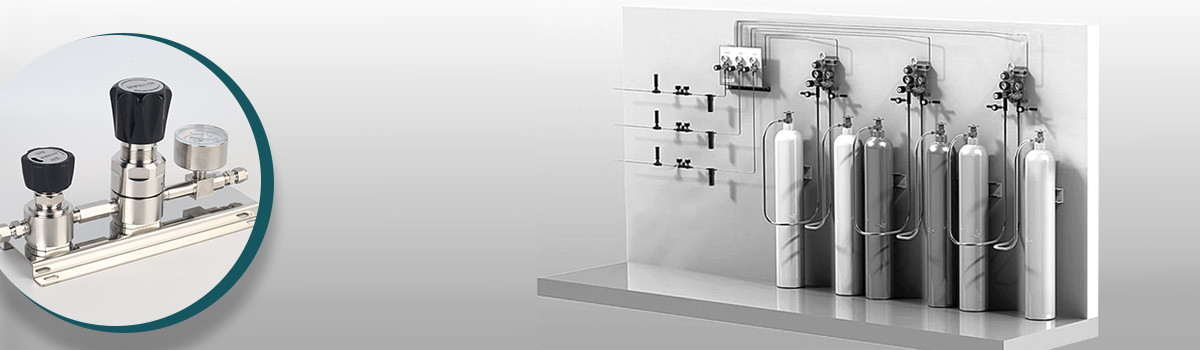
Changeover Manifold
Changeover Manifolds are a safe and simple way of streamlining your gas system. Gas manifolds eliminate the need to manually handle the regulator every time you have to swap out gas cylinders, keeping you and your employees safe.
Table of Contents
ToggleWhat Is a Gas Manifold System?
A manifold is a gas distribution system that connects multiple gas lines and junctions into a single channel. There are many kinds of manifold systems, from simple supply chambers to complex systems that regulate several gas flows.
How Do Gas Manifold Systems Work?
Manifold systems connect to your gas lines and help regulate your gas pressure. They come in a wide variety of configurations, making them compatible with any gas supply system. Manifold systems are extremely versatile—whether you need a dual cylinder outdoor system or a single cylinder indoor system, there’s going to be one that suits your needs.
The core function of a changeover manifold is to maintain a steady supply of gas by switching between primary and reserve gas sources when the primary source is depleted. This process is facilitated through a combination of pressure regulators and control mechanisms, which can be manual, semi-automatic, or fully automatic.Manual Changeover Manifolds: In a manual system, the operator must physically switch the system from the primary to the reserve bank of cylinders when the primary source is depleted. This requires constant monitoring and can lead to downtime during the switch, making it less efficient for critical applications.
Semi-Automatic Changeover Manifolds: These systems use pressure differential sensors to detect when the primary gas source is nearing depletion. The manifold automatically switches to the reserve source, but switching back to the primary source (after refilling or replacing cylinders) requires manual intervention. This reduces downtime while still requiring some operator oversight.
Fully Automatic Changeover Manifolds: Fully automatic systems use electronic sensors, microcontrollers, or pneumatic controls to monitor cylinder pressures and switch between sources without any manual intervention. These systems often include alarms (visual or audible) to alert operators when a cylinder bank is depleted, ensuring timely replacement. Fully automatic manifolds are ideal for high-demand applications where continuous operation is critical.
Most changeover manifolds employ a two-stage pressure reduction system to ensure a stable outlet pressure, regardless of fluctuations in cylinder pressure. The first stage reduces the high pressure from the cylinder, while the second stage fine-tunes the pressure to meet the specific requirements of the application. This two-stage regulation is particularly important for maintaining the purity and consistency of gases used in sensitive processes.
Depending on your system, there can be other features like alarms that notify you when gas is running low and automated safety valves that shut the system down when it detects overly high pressure. While optional, safety features like this are incredibly valuable and worth installing on all gas equipment, manifolds included.
Why Are Manifolds Valuable Gas Equipment?
Now that you better understand the form and function of manifolds, what makes them worth investing in?
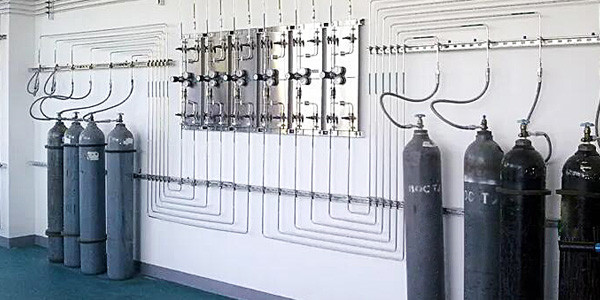
Safety
As mentioned earlier, manifolds are much safer than trying to handle pressure regulation yourself—especially if you opt for additional safety features. A 2020 study by the American Cancer Society found that there are 630,000 gas leaks in local distribution systems every year. These leaks could be happening at your place of business and harming customers and employees without your knowledge.
Manifold systems offer a variety of options to help you avoid gas leaks. One popular choice that keeps people safe and saves money is a safety shut-off valve. This valve is fully automatic and constantly monitors the pressure and flow of your system. If it senses excess pressure or irregular flow changes, it shuts your system down. Keep your employees safe by installing a manifold system today.
Efficiency
Manifolds make your business more efficient. Instead of committing time and resources to handle gas regulation yourself, manifolds keep the process fast and intuitive. Tired of constantly checking valves when swapping out your gas cylinders? A manifold lets you swap the cylinder and keep rolling.
Manifolds are affordable and quickly pay for themselves. Keep your employees focused on what matters—invest in a manifold.
Cut Costs
Manifolds keep everyone safe and on track, but they could be directly responsible for saving money too. Companies spend more than they need to on gas because they fail to realize they’re losing gas to leaks on a day-to-day basis. Gas leaks are responsible for $30 billion in lost revenue annually—installing a high-quality manifold can help you save money on your gas leaks.
Common Designs of Changeover Manifolds and Their Benefits
High-Purity Primary Changeover Systems
High purity changeover manifolds provide a continuous flow of gases. These models typically incorporate two diffusion-resistant regulators. These models allow for the changeover system to be completely isolated. These are often found in a range of materials including brass and stainless steel to allow many types of substances to be used in operations. Delivery pressure can also be highly regulated by utilizing a built-in line regulator.
High-Flow Primary Changeover Systems
These changeover systems provide an uninterrupted high flow of gas. Often, these are used in blanketing or filling vessels.
Electronic Changeover Systems
Electronic changeover systems provide a fully automatic changeover when one of the cylinders becomes depleted. The sensors and circuits on an electronic changeover system provide the means to indicate when a changeover is needed to ensure a continuous gas supply. These systems can also use displays to allow for quick viewing of system operations.
Liquid Changeover Systems
Liquid changeover systems are used for administering vaporized gas from cryogenic containers. They allow for more options of substances to be used in operation and create fewer issues of gas depletion in a system.
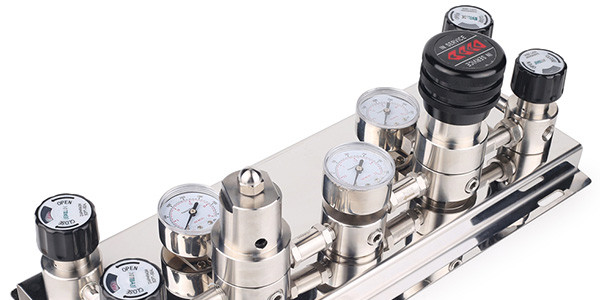
Key Components of Changeover ManifoldsChangeover manifolds are composed of several critical components, each designed to enhance safety, reliability, and efficiency:Pressure Regulators: These devices control the pressure of the gas as it flows from the high-pressure cylinder to the application, ensuring a consistent output pressure. In automatic systems, dual-stage regulators are often used to maintain stability across a wide range of flow rates.
Valves: High-pressure isolation valves, non-return valves, and check valves prevent backflow and ensure that gas flows in the correct direction. These valves are critical for maintaining gas purity and preventing contamination.
Pigtails and Hoses: Flexible or rigid pigtails connect individual cylinders to the manifold header. For certain gases like acetylene, pigtails may include flashback arrestors to enhance safety.
Pressure Gauges and Sensors: These monitor the pressure in each cylinder bank and the delivery line, providing real-time data to operators or automated systems. In electronic systems, digital displays or LED panels may show pressure readings and gas consumption metrics.
Safety Devices: Features such as pressure relief valves, leak monitors, and automatic shutoff systems protect against over-pressurization, leaks, or other hazards. These are particularly important in medical and industrial settings where safety is paramount.
Alarms: Many modern manifolds include alarms that notify operators when a cylinder bank is low or when a changeover occurs, allowing for timely cylinder replacement.
Applications of Changeover Manifolds
Changeover manifolds are used across a wide range of industries where pure gas delivery is critical. Some key applications include:Medical and Healthcare: In hospitals, changeover manifolds ensure a continuous supply of medical gases such as oxygen, nitrous oxide, and medical air for patient therapy, ventilators, and anesthesia machines. Automatic systems like the Powerex FirstCall™ or Silbermann LEO-MN are designed to meet stringent regulatory standards, ensuring patient safety and operational reliability.
Laboratories:
Research facilities rely on changeover manifolds to supply pure gases like helium for gas chromatography or nitrogen for inert atmospheres. An interruption in gas flow can ruin experiments or damage equipment, making automatic changeover systems essential.
Semiconductor Manufacturing:
The semiconductor industry requires ultra-high-purity gases for processes like chemical vapor deposition. Changeover manifolds ensure a continuous supply of gases like nitrogen or argon, minimizing downtime and maintaining product quality.
Food and Beverage:
In this industry, manifolds deliver food-grade gases like carbon dioxide and nitrogen for carbonation, purging, and packaging. These systems reduce costs by minimizing gas waste and ensuring consistent delivery.
Petrochemical and Industrial:
The petrochemical industry uses manifolds to distribute gases like hydrogen and nitrogen for refining processes. These systems provide centralized control and precise gas blending, ensuring operational efficiency.
Selection Criteria For Changeover Manifolds
Each application has a different set of operating parameters that must be evaluated and satisfied. Let’s take a look at some key parameters that users need to understand when selecting a changeover manifold.
1. Automatic or semi-automatic? What’s the difference?
Some suppliers use semi-automatic and automatic interchangeably when describing a changeover manifold. In fact, they are two distinctly different systems.
A semi-automatic changeover normally operates by opposing pressure differential. It switches from the “in-service” side to the “reserve” side automatically, but requires an action by the operator to switch it back from the new “in-service” side to the “reserve side.” Typically this is accomplished by flipping a knob, a lever, or operating a series of valves after replacing the empty cylinders.
An automatic changeover manifold functions electronically. The only action required by an operator for this unit to reverse the changeover is to replace empty cylinders and to re-pressurize the depleted side.
2. The gas supply source is important.
The gas supply source to a changeover may include any combination of the following:
*A standard high pressure cylinder, such as nitrogen or helium
*A cylinder of liquefied gas, such as carbon dioxide
*A six pack, 12 pack, manifold of cylinders
*A cryogenic container of argon, nitrogen, oxygen, or carbon dioxide
*A tube trailer
*A bulk storage tank
While you have all of the above choices and perhaps others, your choice of gas source drives your choice of changeover manifolds. If high pressure cylinders are always to be your source, you have the choice of virtually any automatic or semi-automatic changeover system. Substitute a cryogenic container on one side with a high pressure source on the other side and your choices narrow depending on the operating parameters of delivery pressure and flow.
Automatic changeovers like the AUTO-LOGIC II and ULTRA-LOGIC allow the user to start with high pressure cylinders on both sides, and then expand to a cryogenic source on one side and a high pressure source on the other side. If even higher consumption rates become required, users can easily switch to cryogenic sources on both sides. The automatic changeover may have a higher upfront cost but be more economical in the long term.
3. What is the maximum required flow?
This is often the most difficult parameter for the user to specify. Knowing the maximum flow is important for two reasons. First, you must ensure that the changeover has sufficient capacity to feed the process. A greatly oversized changeover may lead to premature failure. Second, you must ensure that the gas sources are sufficient to meet the operating parameters of the application.
4. Determine the desired gas source change out frequency.
To determine the gas source frequency change out time, consider the flow rate, the total hours of operation, and the time period to obtain full containers to replace the empty side of the changeover.
When choosing a changeover manifold, several factors must be considered to ensure compatibility with the intended application:Gas Type: The manifold must be compatible with the specific gas (e.g., oxygen, acetylene, helium) to prevent corrosion, contamination, or safety hazards. For example, acetylene manifolds require dry flashback arrestors, while oxygen systems need burnout-tested components.
Flow Rate and Pressure Requirements:
The manifold must support the required flow rate and delivery pressure, which vary depending on the application. For instance, high-flow applications like welding may require manifolds with capacities up to 200 m³/h.
Automation Level:
Fully automatic systems are ideal for critical applications, while semi-automatic or manual systems may suffice for less demanding operations.
Safety and Compliance:
In medical or high-purity applications, manifolds must comply with standards like NFPA 99, ISO 7396-1, or EN 14114.
Material Selection:
The choice of materials (e.g., brass, stainless steel) depends on the gas type and environmental conditions. Stainless steel is often preferred for its corrosion resistance and durability.
Maintenance and Monitoring:
Systems with built-in alarms, digital displays, or telemetry options simplify maintenance and ensure timely cylinder replacements.
Future Trends in Changeover Manifolds
As industries continue to prioritize efficiency, safety, and sustainability, changeover manifolds are evolving to meet these demands. Advances in sensor technology and digital controls are leading to smarter manifolds with real-time monitoring and predictive maintenance capabilities. For example, modern manifolds may include IoT-enabled sensors that provide remote access to pressure and flow data, allowing operators to optimize gas usage and reduce waste.
Additionally, the push for sustainability is driving the development of manifolds that minimize gas leaks and improve energy efficiency. In medical settings, manufacturers are focusing on halogen-free materials and advanced regulators to enhance patient safety and reduce environmental impact.
Conclusion
Changeover manifolds for pure gas are a cornerstone of modern gas distribution systems, providing a reliable, safe, and efficient solution for delivering high-purity gases in critical applications. From hospitals to semiconductor plants, these systems ensure uninterrupted gas flow, maintain gas purity, and enhance operational safety. By understanding the types, components, and benefits of changeover manifolds, industries can select the right system to meet their specific needs, ultimately improving productivity and reducing costs. As technology advances, changeover manifolds will continue to evolve, offering even greater precision, safety, and sustainability for the industries that rely on them.